Design guide
Bathroom design trends in NZ for 2026
Trends are only useful if they suit your home and survive daily use. Here is where New Zealand bathroom design is heading in 2026, written for someone about to renovate rather than for a magazine shoot. Take the ideas that fit, leave the rest.
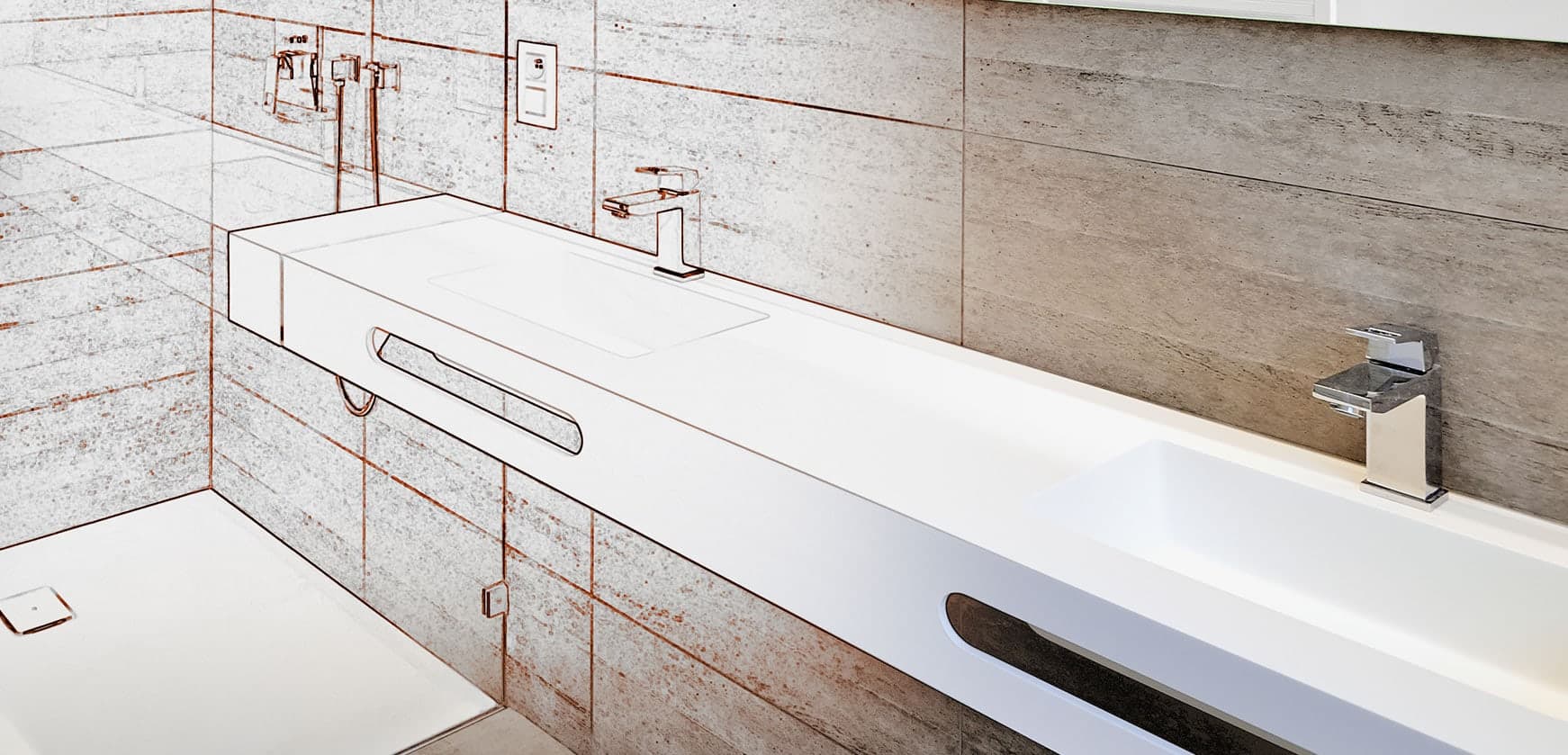
Warm and earthy replaces cold white
The clearest shift for 2026 is away from the cold, clinical, all-white bathroom toward warmer, earthier tones. Think soft off-whites, warm greys, clay, sand, mushroom and muted greens, usually paired with timber-look vanities and a bit of natural stone. The result feels calmer and tends to age better than a stark white room.
This does not mean white is banned. A warmer white with some texture and timber still reads as current. The finishes to be a little wary of are the hard, high-gloss, blue-white ones that make a bathroom feel like a clinic.
Texture and large-format tiles
Two tile trends are running side by side. The first is tactile, textured surfaces: fluted and ribbed tiles, microcement looks and stone textures that give a wall some depth instead of a flat finish. The second is large-format porcelain, big tiles that mean far fewer grout lines, a cleaner look and less to scrub.
Stone-look porcelain is a big part of this, with travertine, limestone, marble-look and terrazzo patterns all popular for 2026. Porcelain gives you the look without the sealing and upkeep of real stone, which matters in a wet area. We go deeper into finishes, slip ratings and grout in our guide to bathroom tile ideas for 2026.
Open, wet-room layouts
Open showers keep gaining ground. Walk-in showers with a single glass screen, and full wet-room layouts where the whole floor is tanked and falls to a drain, both feel more spacious and are far easier to clean than a boxed-in cubicle. In smaller New Zealand bathrooms, losing the shower box can make the whole room feel bigger.
The catch is that an open or level-entry shower lives or dies on the floor falls and the waterproofing underneath, done to Building Code clause E3. It is worth getting right by people who do it often. For a sense of what these layouts cost, see our guide to walk-in shower and wet-room cost.
Layered lighting and warm metals
Lighting is doing more work in 2026. Instead of one ceiling light, the trend is toward layers: a backlit or LED mirror for the face, downlights for the room, and a warm strip under a floating vanity or in a niche. It looks better and it is more practical when you are actually using the space early or late in the day.
Tapware and fittings are warming up too. Brushed nickel, brushed brass, gunmetal and matte black are all common now, often mixed with a timber vanity for contrast. If you are weighing up finishes and storage, our guide to choosing a bathroom vanity covers how these pieces work together. A few pointers that hold up well:
- Pick one main metal finish and repeat it, rather than mixing four.
- A backlit mirror earns its place, but plan the wiring in before tiling, not after.
- Warm white light suits a bathroom better than a cold blue-white.
Universal access goes mainstream
Features that used to read as purely medical are now just good design. Level-entry showers, a bench seat, a wall-hung vanity you can get under, and blocking behind the walls so a rail can be added later all make a bathroom easier to live in at any age. Done well, none of it looks clinical, and it makes a home more comfortable to stay in for longer. It is a trend we are glad to see become normal rather than an afterthought.
What is fading
A few things are starting to date. The fully clinical, high-gloss white bathroom is the main one. Small glossy white subway tiles used everywhere, and cold grey-on-grey schemes with nothing to warm them up, are both losing favour. Busy small mosaics across a large area look fussy and are hard to keep clean. None of this is a rule, and if you genuinely love a look you should build it. It is just worth going in with your eyes open about what tends to age.
FAQs
Trend questions, answered straight
The clearest shifts are away from cold clinical white toward warm, earthy tones, a strong move to textured tiles like fluted and ribbed finishes, and large-format porcelain that cuts down on grout lines. Open wet-room layouts, layered lighting and warm metal tapware round out the list. None of it is compulsory, so pick what suits your home rather than chasing the look.
Like the look of 2026?
Book a free measure and we will help you land a look that suits your home and budget, then price it as a fixed number.